
|
|
The UK Sponsorship Database

The premier online database of UK sponsorship opportunities
|
|

|
|
Why do sponsors sponsor?
When a "client" makes the decision to sponsor an organization as part of his/her marketing activity, he/she is seen to be making a choice.
Using commercial sponsorship involves choosing to link one's own organization with the characteristics of another, to produce an effect which is beneficial. Sometimes the intended benefit is to enhance the image of the sponsor's company; sometimes the intention is to achieve a higher level of awareness of the sponsoring company - usually amongst a specific target group (or 'demographic') - than might have been achieved by other means, either by tapping into the sheer numerical following of the sponsored organization or by piggy-backing on its PR successes.
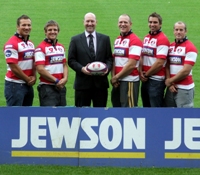
Most often the client's objectives are a mix of these two aspects, with payment being made for benefits in respect of both attitude and awareness. Whilst no-one could ever measure with complete accuracy the degree to which these objectives are achieved, the client's choosing to take up rights to a specific sponsorship "property" is sure to produce powerful effects. In the vast majority of cases, the benefits will outweigh the costs; but part of sponsorship's power resides in the risks associated with it.
For instance, aligning one's company with a particular organization usually means receiving the approval of those who have interest in, allegiance to, or an identification with, the sponsored organization. But, equally, there is often another side to the coin: those who support (as examples) a different football team, who favour a different local arts group, whose loyalties are to a competing charity or who feel that another school's financial needs should have been addressed, may well feel less favourably inclined about the new sponsorship.
Equally a sponsor who supports an athlete or a daring project runs the risk of being associated with failure.
 But in many ways this is the essence of sponsorship: in risking lining up alongside one particular organization or individual, the sponsor is making a powerful statement, often evoking a strong reaction. In this sense, the sponsorship option provides a quick, ready-made solution to the marketing problems faced by a brand which is perceived as being (to a greater or lesser extent) impersonal, by the sponsor's marketing target group.
One of sponsorship's greatest strengths is this ability to add a completely new dimension to the perception of the sponsor's brand or organization: in demonstrating commitment via monetary support, it can add something fresh and exciting. The sponsor buys into the organization - so the organization's 'constituency' buys into the sponsor.
Sponsorship is extremely flexible: it can generate big audience numbers. "Big" is of course a relative term; but because organizations everywhere, of all sizes and types, seek sponsorship, it is comparatively easy to source a sponsorship solution to suit marketing problems at the international, national, regional or local level.
It is also highly flexible in terms of the "association sets" which are on offer. But in many ways this is the essence of sponsorship: in risking lining up alongside one particular organization or individual, the sponsor is making a powerful statement, often evoking a strong reaction. In this sense, the sponsorship option provides a quick, ready-made solution to the marketing problems faced by a brand which is perceived as being (to a greater or lesser extent) impersonal, by the sponsor's marketing target group.
One of sponsorship's greatest strengths is this ability to add a completely new dimension to the perception of the sponsor's brand or organization: in demonstrating commitment via monetary support, it can add something fresh and exciting. The sponsor buys into the organization - so the organization's 'constituency' buys into the sponsor.
Sponsorship is extremely flexible: it can generate big audience numbers. "Big" is of course a relative term; but because organizations everywhere, of all sizes and types, seek sponsorship, it is comparatively easy to source a sponsorship solution to suit marketing problems at the international, national, regional or local level.
It is also highly flexible in terms of the "association sets" which are on offer.

In sport, it provides access to deeply felt emotions amongst those who support a sports person or team; in the arts, it can transform brand perceptions by adding an image of sophistication, refinement, fun, daring, striving or a whole arsenal of other sentiments; in the charities ("cause-related") sector, it can deliver an accurately-targeted solution for brands or companies which might have had no way of showing their "caring" side other than half-hearted protestations made via corporate advertising.
In education, sponsorship can (for instance) ensure that a company is seen to be responsible and community-minded, either locally or on a much wider scale. If a sponsor supports an individual student or apprentice, they have the opportunity to ensure a potential future employee armed with all the necessary, specific skills and expertise prior to offering them employment.
And, in the media, sponsorship can say: "Look, we think the same way that you do - otherwise, why would we be supporting this streaming service, TV programme, website, radio show or magazine supplement?"
Understanding why a particular sponsor uses sponsorship can be very helpful in the tricky task of deciding how to go about finding and attracting sponsors.
|
|
|
|
|
UK home page
|
|
How to get listed (opportunities)
United Kingdom
Download buttons: - the what, how and how much
|
|
How to get listed - services (UK only)
Sponsorship Showcase (UK only)
Estimating the cost of a sponsorship campaign -
S.C.A.L.A. (Sponsorship Cost and Leveraging Assistant)
United Kingdom S.C.A.L.A.
|
|
Other information
Contact us
Add/amend a listing
Advertise with us
About us
Sponsorship Bookshop
Site map
Privacy Policy

|
|
|
|


